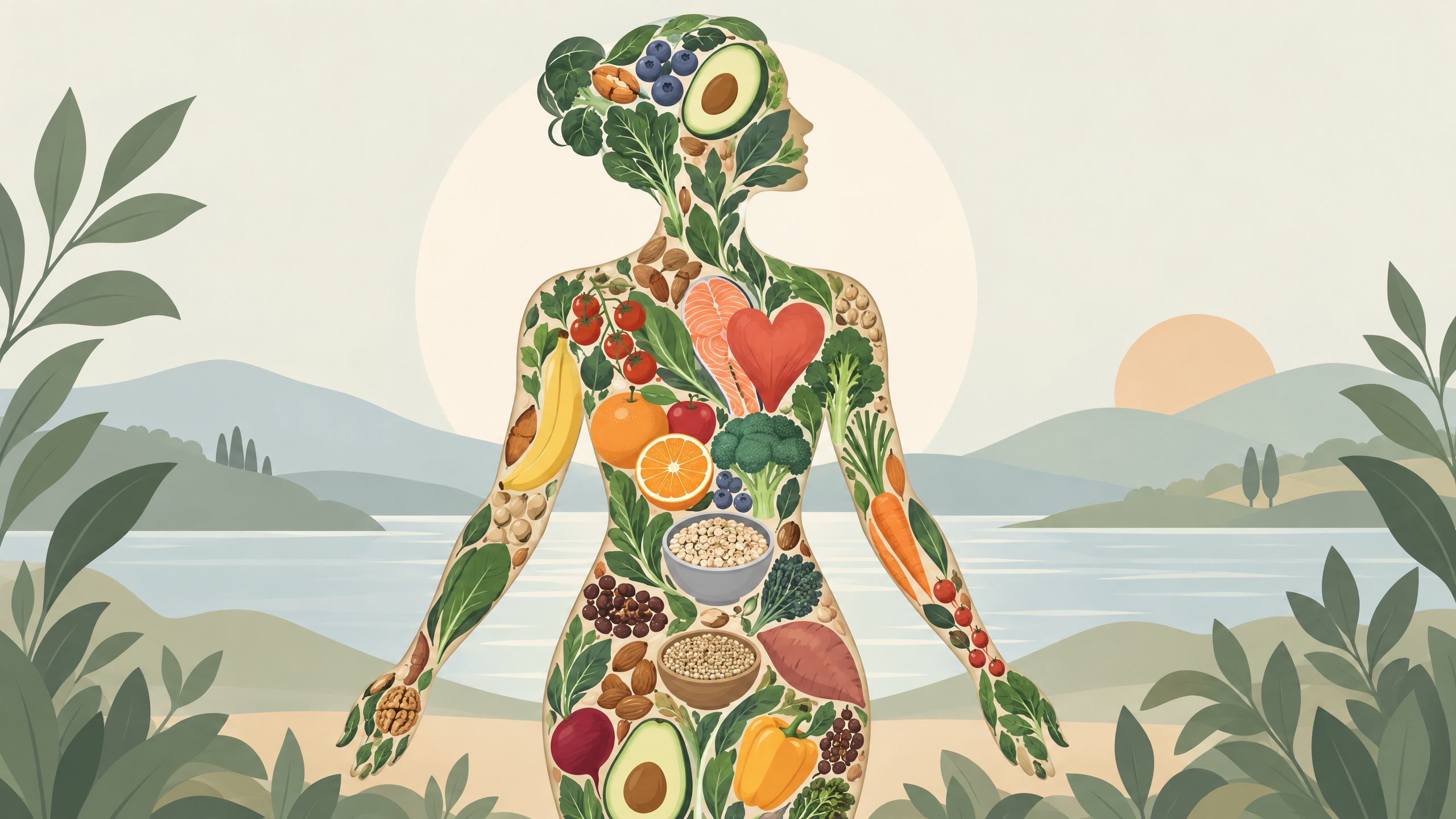
Nutrition advice can be overwhelming. One day fat is the enemy. The next day carbs are. Superfoods come in and out of fashion. Influencers contradict each other. And somehow, despite all the information available, most people still aren’t eating in a way that truly supports their energy, mood, and long-term health.
Here’s what the science actually says — without the noise.
The Foundation: What Good Nutrition Really Means
Good nutrition isn’t about following the latest diet trend. It’s about giving your body the building blocks it needs to function optimally: macronutrients (protein, carbohydrates, fats), micronutrients (vitamins and minerals), fiber, and water. It’s also about eating in a way that’s sustainable — not something you white-knuckle for 30 days and abandon.
The World Health Organization’s dietary guidelines consistently emphasize variety, moderation, and a diet built around whole, minimally processed foods. This framework, simple as it sounds, is backed by decades of research.
Practical Nutrition Tips That Make a Real Difference
Prioritize Protein at Every Meal
Protein is the most satiating macronutrient — it keeps you fuller for longer and reduces the likelihood of energy crashes and overeating. Aim to include a quality protein source at every meal: eggs, chicken, fish, legumes, tofu, Greek yogurt, or cottage cheese. Most adults need roughly 0.8–1.2 grams of protein per kilogram of body weight daily.
Fill Half Your Plate With Vegetables
This one piece of advice from nutrition science consistently holds up across dietary patterns and populations. Vegetables provide fiber, vitamins, minerals, and phytonutrients that support everything from immune function to brain health. The variety matters — different colors = different nutrients.
Don’t Fear Healthy Fats
Fat is not the enemy. Healthy unsaturated fats found in olive oil, avocados, nuts, seeds, and fatty fish (like salmon) support brain health, hormone production, and cardiovascular health. What’s worth limiting? Highly processed trans fats found in many packaged snacks and fast food.
Manage Blood Sugar With Smart Carb Choices
Blood sugar instability is one of the biggest drivers of energy crashes, mood swings, and cravings. The fix isn’t cutting carbs — it’s choosing complex carbs (oats, sweet potatoes, legumes, whole grains) over refined ones (white bread, sugary cereals, pastries), and pairing carbs with protein and fat to slow glucose absorption.
Eat Mindfully
How you eat matters as much as what you eat. Eating quickly, while distracted, or when stressed impairs digestion and leads to overeating. Try eating slowly, chewing thoroughly, and putting your phone down during meals. Studies show that people who eat mindfully consume significantly fewer calories and report greater satisfaction from their food.
Support Your Gut Health
Your gut microbiome — the trillions of bacteria living in your digestive tract — influences digestion, immunity, mental health, and even metabolism. To support a healthy gut, eat plenty of fiber-rich foods (vegetables, legumes, whole grains), include fermented foods (yogurt, kefir, sauerkraut, kimchi), and minimize heavily processed foods that disrupt the microbiome.
Stay Consistently Hydrated
Mild dehydration — losing just 1–2% of your body’s water — measurably impairs cognitive performance, mood, and physical function. The “eight glasses a day” guideline is a reasonable starting point, but needs vary based on activity, climate, and body size. If your urine is pale yellow, you’re well hydrated. Dark yellow suggests you need more water.
Plan Ahead to Avoid Reactive Eating
Most poor nutrition choices happen not out of willpower failure but out of circumstance — you’re hungry, there’s nothing ready, and the easiest option is a vending machine or drive-through. Spending 30 minutes on a Sunday to plan meals and prep a few basics (cooked grains, washed vegetables, hard-boiled eggs) removes friction and makes healthy choices the default.
What to Eat Less Of
You don’t have to be perfect. But there are categories of foods where the evidence for harm is consistent and strong:
- Ultra-processed foods (packaged snacks, fast food, sugary drinks): Associated with increased risk of obesity, heart disease, type 2 diabetes, and depression
- Added sugar: More than 25g/day for women, 36g/day for men (WHO guidelines) is where health risks increase meaningfully
- Excess sodium: Particularly problematic for blood pressure in salt-sensitive individuals
A Note on Diets
Rather than following a specific named diet, consider adopting patterns that research consistently links to good health: the Mediterranean diet, the DASH diet, or simply a whole-foods-based eating pattern. These approaches share more similarities than differences — lots of vegetables, quality protein, healthy fats, and minimal processed food.
Whatever eating pattern you choose, the best diet is the one you can sustain long-term without feeling deprived. For more on supporting your energy through lifestyle, read our guide on natural ways to boost energy and morning wellness routines that complement a nutritious diet.