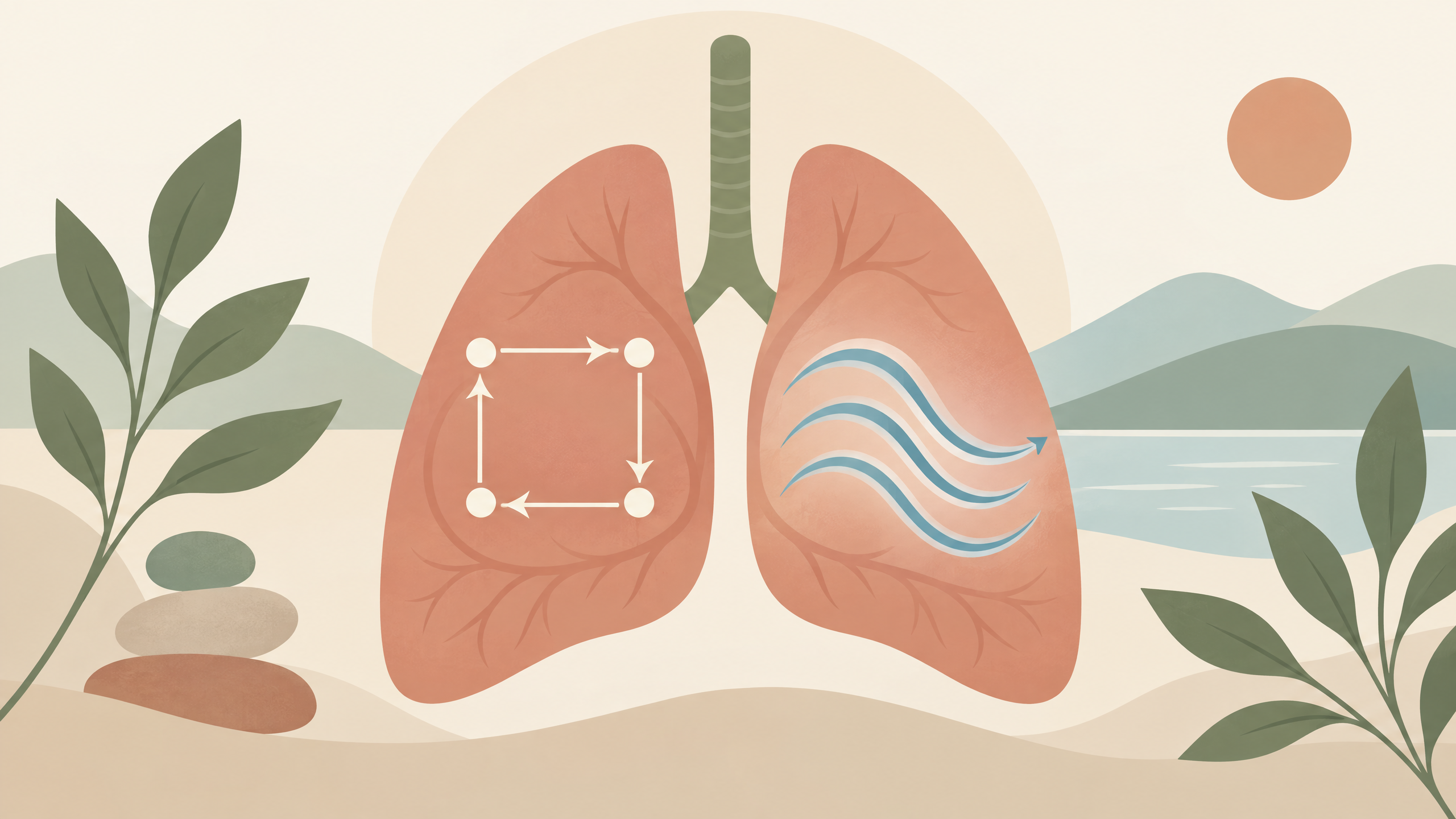
Controlled breathing is one of the few wellbeing interventions with both a clear physiological mechanism and strong research support. By deliberately slowing and regulating breath, you can activate the parasympathetic nervous system — the “rest and digest” response that counteracts the stress-driven “fight or flight” state.
Two techniques dominate the evidence: box breathing (also called square breathing) and 4-7-8 breathing. Both work. But they work in slightly different ways and are best suited to different situations.
Box Breathing (4-4-4-4)
Box breathing was developed in military contexts and is widely used by the US Navy SEALs, emergency responders, and athletes to manage high-stress performance situations. It’s also become one of the most commonly recommended techniques in CBT and mindfulness-based therapies.
How to do it:
- Inhale through your nose for 4 counts
- Hold the breath in for 4 counts
- Exhale through your mouth for 4 counts
- Hold the breath out for 4 counts
That’s one cycle. Repeat four to five cycles. Total time: about 90 seconds.
The physiological mechanism:
Each hold phase — both in and out — creates a brief CO₂ build-up that triggers the body’s chemoreceptors, which respond by activating the vagus nerve. The vagus nerve is the primary driver of the parasympathetic response, controlling heart rate, digestion, and the immune system. Slow, extended exhalation also directly activates the vagus nerve through pressure changes in the chest.
The four-count structure is deliberate: it’s slow enough to produce a meaningful physiological effect but fast enough to maintain without discomfort for beginners.
Best for:
- Acute stress before a high-pressure event (presentation, difficult conversation)
- Anxiety and panic attacks — the structured rhythm gives the mind something concrete to focus on
- Improving focus and alertness before demanding cognitive work
- Situations where you need to remain alert while reducing physiological arousal (a meeting, while driving, before a competition)
Box breathing is one of the techniques in our grounding toolkit for anxious moments.
4-7-8 Breathing
The 4-7-8 technique was popularised by Dr Andrew Weil, who based it on pranayama breathing practices from the yogic tradition. It differs from box breathing primarily in the dramatically extended exhale — the 8-count breath out produces a stronger parasympathetic response and is particularly effective for sleep and deep relaxation.
How to do it:
- Exhale completely through your mouth
- Close your mouth and inhale through your nose for 4 counts
- Hold the breath for 7 counts
- Exhale completely through your mouth for 8 counts (make a gentle whooshing sound)
That’s one cycle. Repeat three to four cycles. Total time: about two minutes.
The physiological mechanism:
The extended 7-count hold allows CO₂ levels to build significantly, producing a stronger parasympathetic activation than box breathing. The 8-count exhale activates the vagus nerve powerfully. The net effect is a pronounced slowing of heart rate and a strong sedative response — which is why 4-7-8 is particularly effective for sleep.
Best for:
- Falling asleep (or returning to sleep after waking at night)
- Deep relaxation after a stressful day
- Reducing anger or intense emotional arousal (“cool down” after an argument)
- Situations where you want sedation, not just calm alertness
Caution: Some people feel lightheaded or dizzy during the 7-count hold, particularly at first. If this happens, reduce the hold to 5 counts until you’ve practised for a few weeks and your system adapts.
Direct Comparison
| Box Breathing | 4-7-8 Breathing | |
|---|---|---|
| Pattern | 4-4-4-4 | 4-7-8 |
| Duration (one cycle) | ~16 seconds | ~19 seconds |
| Effect intensity | Moderate calm + alertness | Strong sedation |
| Best time to use | Before/during stress | Before sleep, after intense stress |
| Alertness after | Maintained or improved | Reduced (sleep-promoting) |
| Dizziness risk | Low | Moderate initially |
| Origin | Military/performance | Yogic/integrative medicine |
Which Should You Start With?
Start with box breathing if you want a general-purpose stress management tool that you can use throughout the day, before stressful events, or in acute anxiety moments without feeling drowsy afterwards.
Start with 4-7-8 if your primary goal is sleep — specifically falling asleep faster or returning to sleep after waking. It’s one of the most effective non-pharmacological sleep interventions available.
Many people use both: box breathing during the day for stress management, 4-7-8 in bed as a sleep-onset tool.
Building the Habit
Breathing techniques become more effective with practice — not because the technique improves, but because your nervous system learns to respond more quickly to the trigger. After several weeks of regular practice, two or three cycles may produce results that initially took ten.
Practice once per day on calm days so the technique is automatic when you need it under pressure. Pair it with mindfulness meditation for a comprehensive breath-focused wellbeing practice.
Both techniques are free, require no equipment, and can be done anywhere. The only barrier is starting.