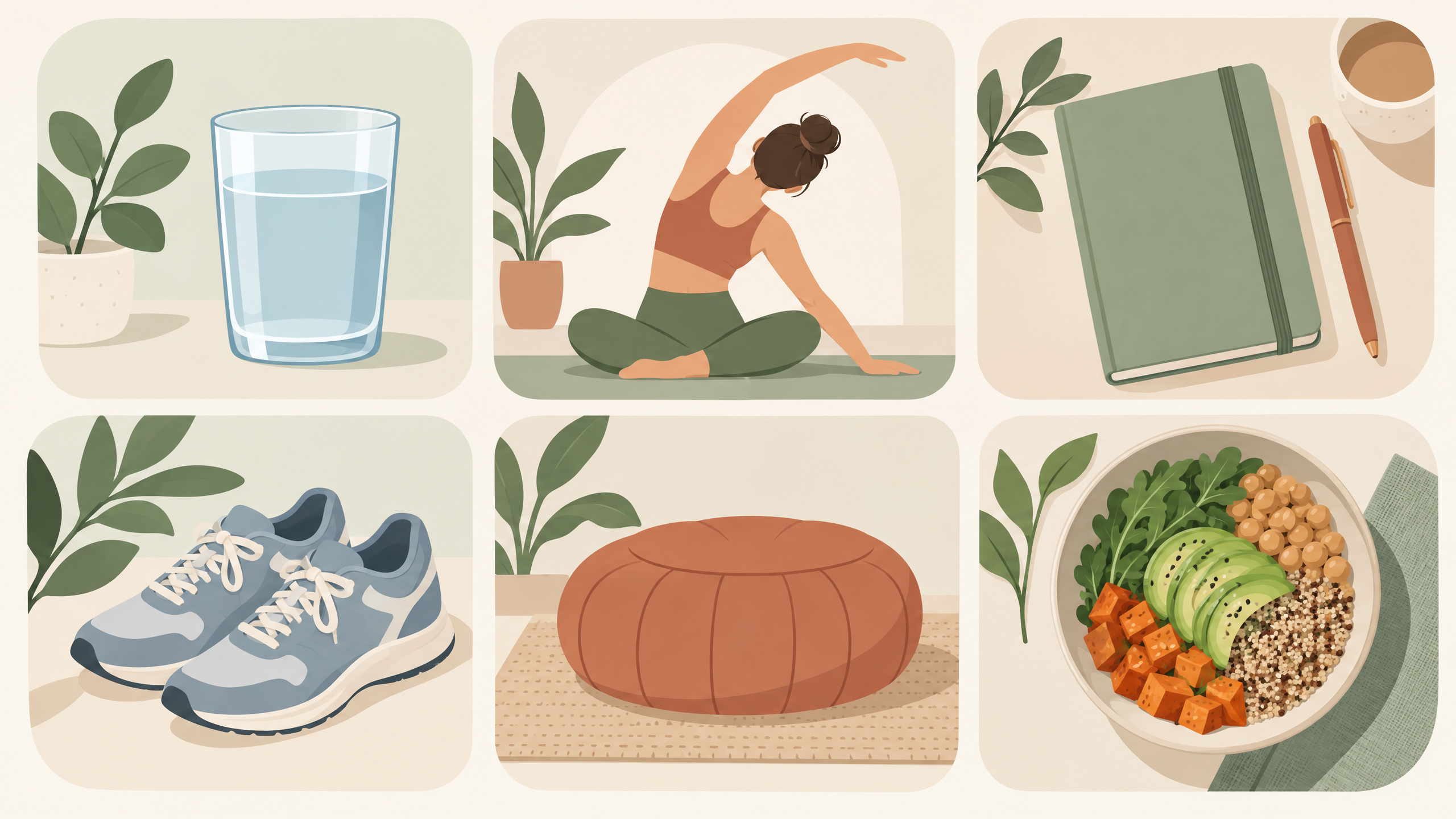
The research on wellbeing is unambiguous on one point: consistency beats intensity. Ten minutes of a good habit practised daily produces more lasting benefit than an hour of the same thing done occasionally. The problem is that most people try to build too much at once and abandon everything when life gets busy.
These 15 habits are each under 10 minutes. None of them require special equipment, gym membership, or a perfect schedule. Start with two or three. Add more as they stick.
Morning Habits (Under 10 Minutes Each)
1. Five-Minute Morning Intention
Before you pick up your phone, spend five minutes thinking about one thing you want to accomplish today and one thing you’re looking forward to. Research from the University of Toronto found that brief morning planning reduces afternoon procrastination and improves task completion.
2. One Glass of Water Before Coffee
Dehydration equivalent to just 1–2% of body weight impairs cognitive function, mood, and energy. Drinking 400–500ml of water on waking — before caffeine — takes 30 seconds and offsets overnight fluid loss.
3. Two Minutes of Sunlight
Natural light within 30 minutes of waking helps regulate your circadian rhythm, which affects sleep quality, mood, and cortisol patterns. Even on a cloudy day, outdoor light is 5–50x more intense than indoor lighting. Open a window. Step outside briefly.
4. Three Gratitude Points
Writing three specific things you’re grateful for takes three minutes and has consistent research support. The key is specificity: not “I’m grateful for my health” but “I’m grateful that I woke up without the headache I had yesterday.” Specificity prevents habituation and keeps the practice meaningful.
Movement Habits
5. A 10-Minute Walk
Walking is the most studied physical activity in wellbeing research. A 10-minute walk improves mood within 7 minutes, reduces cortisol, and provides a gentle cardiovascular stimulus. If you’re sedentary most of the day, three 10-minute walks produces health benefits comparable to one 30-minute session.
6. Five Minutes of Stretching or Yoga
Sustained sitting tightens hip flexors, weakens the posterior chain, and increases tension in the neck and shoulders. Five minutes of basic stretching — hip flexor stretch, chest opener, neck rolls, forward fold — reduces physical tension that accumulates through sedentary work and contributes to fatigue and irritability.
7. One Minute of Cold Water
Finishing your shower with 30–60 seconds of cold water reduces cortisol, increases alertness, and has been linked to improvements in mood and energy. This isn’t a comfortable habit — it’s an effective one. Start with 10 seconds and build.
Mental and Emotional Habits
8. Five Minutes of Mindful Breathing
Box breathing (inhale 4 counts, hold 4, exhale 4, hold 4) or simple diaphragmatic breathing activates the parasympathetic nervous system — the “rest and digest” counterpart to the stress response. Five minutes produces measurable reductions in cortisol and heart rate. This is most effective mid-afternoon or before stressful events.
9. One Meaningful Check-In
Send a brief message — two sentences is enough — to someone you care about. This isn’t about networking or maintaining appearances. It’s about maintaining the depth of connection that social wellbeing requires. Relationships require maintenance, and the most sustainable maintenance is small and frequent rather than large and rare.
10. Five Minutes of Journalling
You don’t need a structured prompt. Three to five sentences about what’s on your mind, what you’re feeling, or what happened today is sufficient. Research by James Pennebaker at UT Austin found that brief expressive writing consistently reduces psychological distress and improves immune function. See our wellbeing journal prompts for structured questions if you want more direction.
Evening Habits
11. A 10-Minute “Day Close”
Review what you completed, what’s unfinished, and what you’ll carry into tomorrow. This prevents the mental loop of unresolved tasks playing through your head at 2am. David Allen’s GTD research shows that our brains fixate on uncompleted tasks (the Zeigarnik effect) until we have a trusted system to hold them.
12. Screen-Free Wind-Down (10 Minutes)
Blue light from screens suppresses melatonin production by 23–50%, delaying sleep onset. Ten minutes without screens before bed — reading, light conversation, stretching — begins the hormonal shift toward sleep. It also signals your brain that the day is over, which reduces ruminative thinking.
13. A Fixed Bedtime (No Effort Required)
This isn’t really a habit so much as a decision. Going to bed at roughly the same time each night — even on weekends — is one of the highest-impact sleep interventions. It anchors your circadian rhythm. Sleep deprivation is the single most underestimated driver of poor mood, poor decision-making, and low energy.
Nutrition Habits
14. Eat Protein at Breakfast
Including 20–30g of protein at breakfast (eggs, Greek yoghurt, smoked salmon, protein shake) reduces hunger hormones (ghrelin) for 3–4 hours, stabilises blood sugar, and reduces afternoon cravings. This isn’t about weight loss — it’s about energy stability through the morning.
15. A Handful of Walnuts or Almonds Daily
A small daily serving of nuts (a 30g handful) provides omega-3 fatty acids, magnesium, and antioxidants that support brain health, reduce inflammation, and are associated with lower rates of depression and anxiety. This takes five seconds. It’s one of the easiest single dietary habits with meaningful evidence behind it.
How to Start
Don’t try to implement all 15 at once. Choose two or three from different sections — one morning, one movement, one evening. Practise them for two weeks until they feel automatic before adding more.
Track your progress using a simple habit tracker or our wellbeing tracking guide. And if you want to see how these habits affect your measured wellbeing over time, use the WHO-5 index monthly to track the trend.
Small things, done consistently, produce large results. Start today.