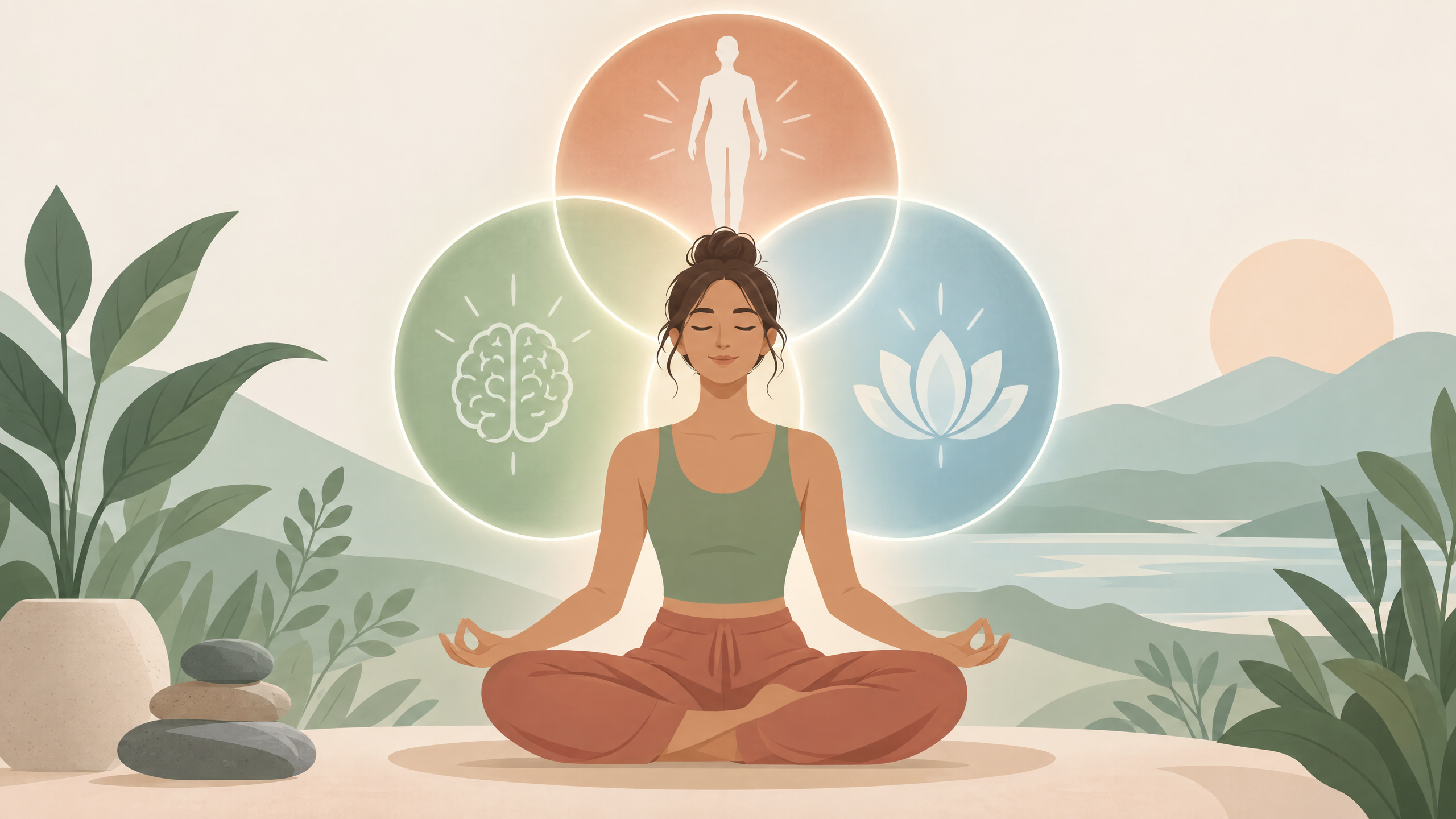
The word “holistic” gets thrown around a lot in wellness circles — sometimes loosely, sometimes attached to products that have little to do with the concept. But the underlying idea is genuinely important: human health isn’t a collection of separate systems to be optimized in isolation. Your physical health affects your mental health. Your mental state affects your physical body. Your sense of meaning and connection shapes both.
Holistic wellness is the practice of attending to all of these dimensions rather than fixating on one while neglecting the others. It’s less a specific regimen and more a framework for thinking about health in its full complexity.
Why Fragmented Health Approaches Fall Short
Most health advice focuses on one domain: eat better, exercise more, sleep longer, meditate daily. Each piece of advice is legitimate on its own. The problem is when people chase each one in isolation, addressing symptoms without addressing the system.
Someone who is perfectly fit but chronically lonely and purposeless is not well. Someone with an immaculate diet but crippling anxiety isn’t optimally healthy either. And someone highly spiritually connected but completely sedentary faces its own risks.
Real wellbeing emerges from the interaction of physical vitality, mental clarity, emotional balance, and meaningful connection. These aren’t separate pillars — they’re more like interlocking gears. When one lags badly, the others feel the drag.
The Physical Foundation
Physical health forms a practical foundation for everything else. This isn’t because the body is more important than the mind — it’s because physical neglect creates suffering that makes all other wellness work harder.
Movement is perhaps the single most validated health behavior across all dimensions. Regular aerobic exercise improves mood, reduces anxiety, sharpens cognition, improves sleep, and extends healthy life expectancy. Our guide on exercise and mental health covers the mechanisms in detail.
Nutrition supplies the literal building blocks of neurotransmitters, hormones, and cellular energy. What you eat doesn’t just affect your waistline — it affects your mood, your stress response, and your cognitive performance. Consistently poor nutrition creates a biological environment in which mental health is harder to maintain.
Sleep is the body’s primary restoration mechanism. Cutting sleep to get more done is counterproductive at even moderate levels of deprivation. Seven to nine hours of quality sleep supports emotional regulation, immune function, and cognitive performance in ways nothing else fully replicates.
These aren’t wellness extras. They’re the infrastructure.
The Mental and Emotional Dimension
Mental wellness goes beyond the absence of diagnosed conditions. It encompasses how we manage stress, process emotions, maintain perspective, and think about ourselves and others.
Stress management is foundational. Chronic, unmanaged stress degrades physical health, impairs decision-making, damages relationships, and erodes quality of life across every domain. The key is developing a personal toolkit of evidence-based stress reduction practices — whether that’s exercise, meditation, journaling, time in nature, or creative outlets.
Emotional intelligence — the ability to identify, understand, and manage your own emotions, and to recognize and respond well to others’ — is one of the strongest predictors of life satisfaction, relationship quality, and professional success. It can be developed with intention.
Mindset shapes how we interpret and respond to circumstances. A growth-oriented mindset — viewing challenges as opportunities to learn rather than evidence of fixed limitations — is consistently associated with greater resilience and wellbeing. For more on building resilience specifically, read our guide on emotional resilience.
Connection, Purpose, and Meaning
The third dimension of holistic wellness is often the most overlooked — particularly in productivity-focused approaches to health. Yet research on longevity and wellbeing consistently identifies it as central.
Social connection is not optional for human health. Loneliness has been found to have health impacts comparable to smoking 15 cigarettes daily. Meaningful relationships — characterized by genuine mutual care, honest communication, and shared experience — are one of the strongest predictors of both happiness and physical health.
Sense of purpose is similarly powerful. People who feel their lives have meaning and direction — who can answer “why” they’re doing what they’re doing — show lower rates of depression, better physical health outcomes, and greater resilience under stress.
Engagement with something larger than yourself — whether through community, creative work, spiritual practice, or meaningful contribution — provides psychological anchoring that protects against existential drift and the malaise that comes from living only for immediate gratification.
Integrating All Three: A Practical Starting Point
Holistic wellness sounds comprehensive — and it is. But it doesn’t require doing everything at once. A more realistic approach:
Take stock honestly. Where are you genuinely doing well? Where are you genuinely neglecting? Most people have obvious weak areas when they look honestly. Start there.
Make the basics non-negotiable. Sleep, movement, and reasonably consistent nutrition are the substrate for everything else. If these are severely lacking, address them first before adding complexity.
Build meaningful connection deliberately. Especially as adults, relationships require active cultivation. Reach out. Show up. Schedule regular time with people who matter to you.
Find or reconnect with purpose. This might be a creative practice, a community you contribute to, work you find meaningful, or spiritual engagement. If purpose feels absent, that’s worth investigating — it’s one of the most important threads to pull.
Practice integration, not perfection. Holistic wellness isn’t about achieving some ideal state. It’s about maintaining enough balance across all dimensions that life feels sustainable, meaningful, and good — most of the time.
For deeper dives into individual components, explore our guides on mindfulness meditation, stress management, and morning wellness routines that bring these principles into daily life. Wellbeing isn’t a destination — it’s a direction you keep choosing.