Most people know roughly what healthy eating looks like. Vegetables, protein, whole grains, not too much sugar. The challenge isn’t the knowledge — it’s turning that knowledge into consistent daily behavior when life is busy, food is everywhere, and willpower is finite.
The secret isn’t willpower. It’s habits and environment design. This guide covers the eating habits that research consistently links to better health — and the practical strategies for making them stick.
Why Eating Habits Matter More Than Diets
“Diet” implies a temporary state — something you go on, endure, and eventually stop. “Habit” implies something integrated into your normal life, something that becomes as automatic as brushing your teeth.
Research from the American Journal of Clinical Nutrition consistently shows that it’s eating patterns over years — not short-term dietary interventions — that most strongly influence long-term health outcomes. The goal isn’t to be perfect for 30 days. It’s to eat a little better, more consistently, for the rest of your life.
The Healthy Eating Habits Worth Building
Cook More of Your Own Meals
This single habit has more impact on dietary quality than almost any other. When you prepare your own food, you control the ingredients, portions, and cooking methods. Restaurant meals — even “healthy” ones — are typically higher in sodium, added sugar, and calories than home-cooked equivalents.
You don’t need to cook elaborate meals. Simple food done consistently beats complex food done occasionally. Batch cooking on weekends (roasting a tray of vegetables, cooking a pot of grains, grilling some protein) makes weeknight meals effortless.
Eat More Slowly and Mindfully
It takes roughly 20 minutes for satiety hormones to signal your brain that you’re full. Eating quickly means you regularly overeat before that signal arrives. Slowing down — putting your fork down between bites, chewing thoroughly, eating without screens — allows you to eat less while feeling more satisfied. Studies show mindful eaters consume 10–15% fewer calories without trying.
Front-Load Your Nutrition
Energy and willpower are highest in the morning and typically decline throughout the day. Apply this to eating: make breakfast and lunch your most nutritious meals, and dinner can be lighter. This also aligns with chrono-nutrition research, which shows the body metabolizes food more efficiently earlier in the day.
Make Vegetables Easy to Access
You’re most likely to eat what’s convenient. If vegetables require washing, chopping, and cooking before you can eat them, you probably won’t reach for them when you’re hungry and tired. Spend 20 minutes at the start of the week washing and prepping vegetables, and you’ll eat significantly more of them. Keep cut vegetables at eye level in the fridge, not hidden in a drawer.
Use the “Eat the Rainbow” Framework
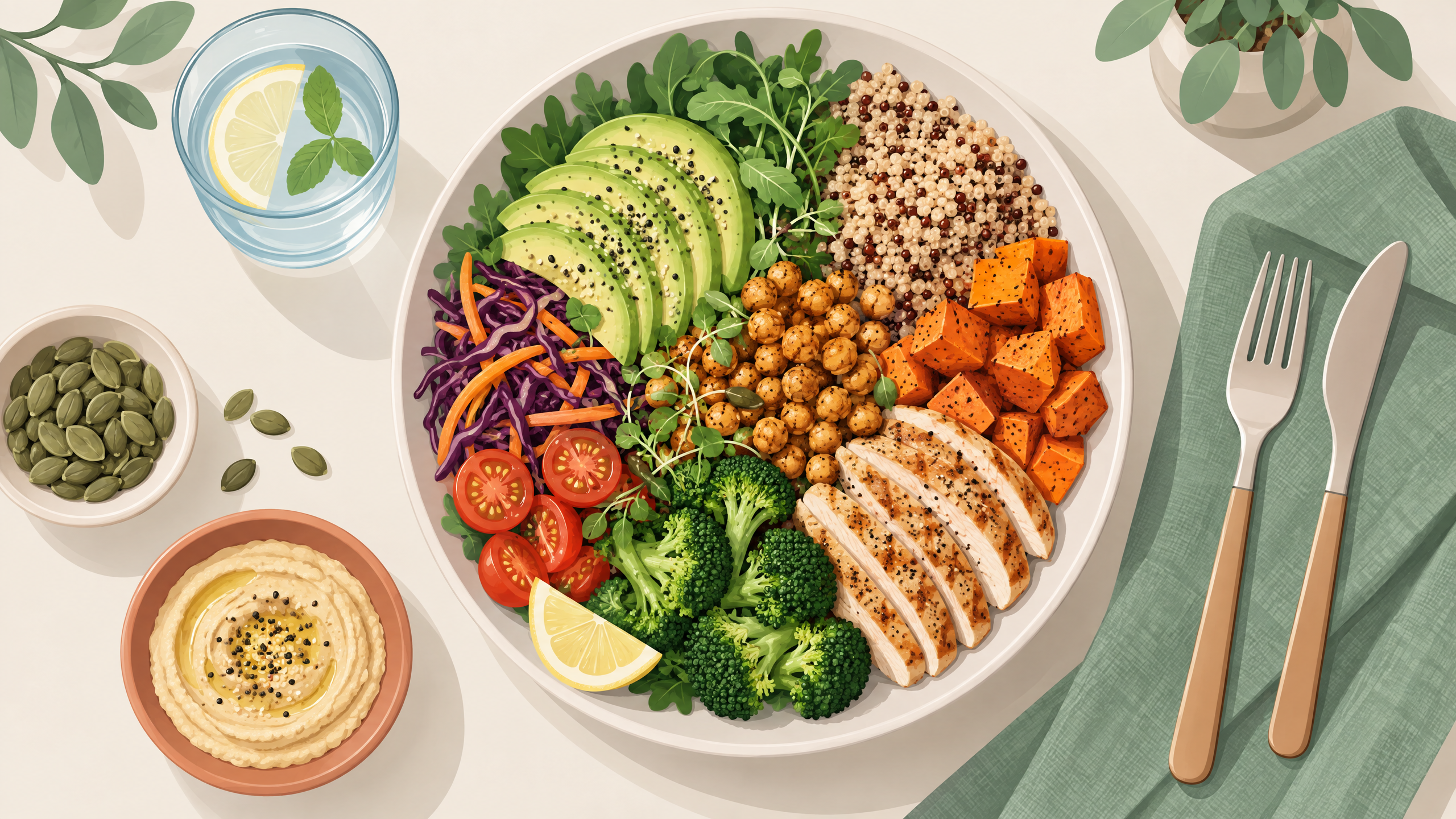
Different colored vegetables and fruits contain different phytonutrients — plant compounds that act as antioxidants, anti-inflammatories, and immune supporters. Red bell peppers, orange sweet potatoes, yellow squash, leafy greens, blueberries, purple cabbage — eating a variety of colors ensures you’re getting a broad spectrum of micronutrients that no supplement fully replicates.
Read Ingredient Lists, Not Just Nutrition Labels
Nutrition panels can be manipulated (serving sizes adjusted to make numbers look better). The ingredient list doesn’t lie. A short list of recognizable ingredients is generally a better food than a long list of additives, preservatives, and chemical names. This is a simple heuristic that filters out most ultra-processed foods.
Eat to 80% Full
This practice — called hara hachi bu in Japanese longevity culture — means stopping eating when you feel 80% full, rather than eating until completely satiated. Since fullness signals lag behind actual food intake, stopping at 80% subjective fullness tends to align with actual physical fullness. It’s a practical way to avoid chronic overeating without counting calories.
Plan for the Situations You’re Likely to Face
Most unhealthy eating happens in predictable circumstances: late meetings with no healthy food available, airport trips, social events with limited options. If you know these situations arise regularly, have a plan. Carry healthy snacks (nuts, a piece of fruit, protein bars). Eat something nutritious before social events where food options will be limited. Order first at restaurants to reduce the influence of what others are ordering.
The Role of Treats and Flexibility
Rigid perfection is the enemy of sustainable healthy eating. Research on dietary restraint shows that people who allow themselves flexibility and occasional “treats” without guilt tend to maintain healthier diets long-term than those who follow strict rules and experience cycles of restriction and overconsumption.
A useful framework: focus on making 80–90% of your food choices nutritious and leave room for 10–20% flexibility. This isn’t license to eat junk food constantly — it’s permission to enjoy food socially and not treat every imperfect meal as a failure.
Getting Started Without Overhauling Everything
Pick one habit from this list and implement it for two weeks before adding another. Real behavioral change is built one small habit at a time. For deeper support on building a health-supporting lifestyle, explore our guides on best nutrition tips for optimal wellbeing and natural energy boosters.