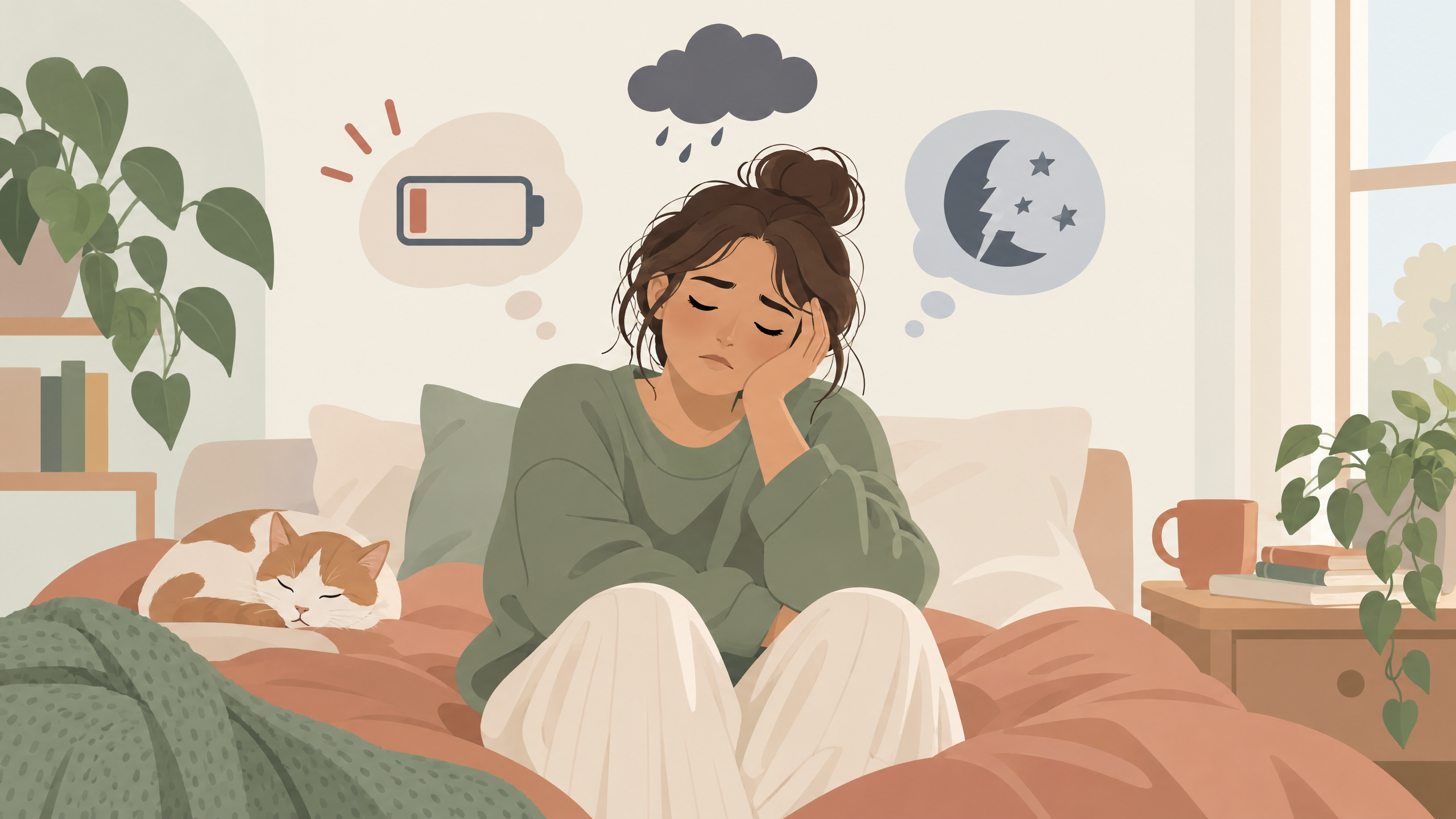
Wellbeing rarely collapses overnight. It erodes gradually — through weeks or months of disrupted sleep, increasing isolation, persistent low mood, and a growing sense that something is wrong without being able to name it clearly.
The problem is that gradual erosion is hard to spot in yourself. We adapt. We normalise. We tell ourselves it’s just a busy period. Then one day the problem is severe enough that it’s impossible to ignore — and the recovery is much longer than it needed to be.
Knowing the early warning signs — across physical, emotional, social, and occupational dimensions — is how you catch problems while they’re still manageable.
Physical Warning Signs
Persistent fatigue that doesn’t respond to rest If you’re sleeping your usual hours but still waking exhausted, and this has persisted for more than two or three weeks, it’s a signal worth investigating. Fatigue that doesn’t respond to rest often has an emotional or physiological cause beyond just “not sleeping enough.”
Frequent minor illnesses Chronic stress and low wellbeing suppress immune function. If you’re catching every cold going round, getting recurrent infections, or taking longer than usual to recover from minor illnesses, this is the body’s way of flagging that something is wrong systemically.
Changes in appetite or eating patterns Significant changes in appetite — eating noticeably more or less than usual, losing interest in food you normally enjoy, or turning to food for emotional regulation — are reliable early indicators of psychological distress.
Physical tension without obvious cause Chronic headaches, jaw clenching, neck and shoulder tightness, and digestive discomfort (the gut-brain connection is well established) can all be somatic manifestations of stress and poor emotional wellbeing.
Emotional Warning Signs
Reduced emotional range When wellbeing drops, emotional experience often becomes flatter. Things that used to bring pleasure — hobbies, music, social events — stop producing the same response. This isn’t the same as sadness. It’s more like numbness. Psychologists call it anhedonia, and it’s one of the earliest and most reliable indicators of clinical depression.
Increased irritability or reactivity If you notice yourself snapping at people more than usual, having low tolerance for small frustrations, or experiencing disproportionate emotional reactions, this often signals that your emotional reserves are depleted. You have less buffer between stimulus and response.
Persistent worry or rumination Occasional worry is normal. Persistent, circular rumination — the same thoughts cycling without resolution — that occupies significant portions of your day is a sign of poor emotional wellbeing. Particularly common: replaying past events or catastrophising about future ones.
Sense of hopelessness or “what’s the point” A persistent belief that things won’t improve, or that effort isn’t worth making, is a significant warning sign. This is different from healthy scepticism or realism. If you notice this becoming a baseline rather than an occasional thought, take it seriously.
Social Warning Signs
Increasing withdrawal from people Gradually seeing friends and family less, cancelling social plans, not returning messages — sometimes called “social atrophy.” This is both a symptom and a cause of poor wellbeing. Isolation compounds the underlying problem.
Feeling like a burden to others The belief that other people would be better off without you — that you’re a burden to your friends, family, or colleagues — is a serious warning sign that warrants immediate attention. If you’re experiencing this thought regularly, please speak to a mental health professional or call a crisis line.
Loss of interest in relationships If you find yourself indifferent to people you previously cared about, or unable to invest emotionally in relationships that matter to you, this is worth noting. It’s different from healthy introversion or needing space — it’s a loss of caring.
Occupational Warning Signs
Chronic presenteeism Turning up at work but unable to concentrate, getting through the minimum, clock-watching — this is often the professional face of poor wellbeing. You’re there physically but not psychologically.
Dread rather than occasional reluctance Occasional reluctance about work is normal. A heavy, physical dread of going to work — particularly if it starts on Sunday evenings — signals something more significant. This is often an early sign of burnout, which is much easier to address early than late.
Cynicism about previously meaningful work If you’ve become detached or contemptuous about work you used to care about, this is a key diagnostic criterion for occupational burnout. The work hasn’t necessarily changed — your relationship to it has.
What to Do When You Notice These Signs
First, take them seriously. The tendency to dismiss or minimise (“everyone feels like this, it’s just a busy period”) allows treatable problems to become severe ones.
Second, measure. Use the WHO-5 Wellbeing Index to get a baseline score. If it’s below 50, seek professional guidance.
Third, address the most acute sign first. If sleep is disrupted, fixing sleep is almost always the first priority. If social isolation is growing, reconnection comes before everything else.
Finally: the signs above can indicate depression, anxiety, or burnout — all of which respond well to treatment. Asking for help is the smartest thing you can do when wellbeing is declining. See your GP. Talk to a therapist. Tell someone close to you what you’re experiencing.
Early action is faster, cheaper, and less painful than late crisis management. Your wellbeing is worth protecting proactively.