“Wellbeing,” “wellness,” and “mental health” are used so interchangeably that most people assume they mean the same thing. They don’t — and understanding the difference isn’t just semantic. It changes what you focus on and how you measure progress.
Wellness: The Practice of Healthy Living
Wellness is largely about what you do. It refers to the active pursuit of habits, behaviours, and choices that support good physical and mental health. Sleep hygiene, exercise routines, diet, stress management techniques, and self-care rituals are all in the domain of wellness.
Wellness is often discussed in terms of “lifestyle” — it’s practice-oriented and behaviour-focused. The wellness industry (which includes gyms, supplements, meditation apps, and detox programmes) markets products and services designed to improve your wellness practices.
Key characteristics of wellness:
- Practice-based — what you actively do
- Often measurable through habits and behaviours
- Strong emphasis on physical health and lifestyle
- Preventive in orientation
Mental Health: A Clinical Dimension
Mental health refers specifically to your psychological and emotional state — your ability to think clearly, regulate emotions, maintain relationships, and function in daily life. It exists on a spectrum: everyone has mental health, just as everyone has physical health, and it fluctuates over time.
Mental health is often discussed in clinical or medical contexts. Conditions like depression, anxiety, PTSD, and bipolar disorder are mental health conditions. Therapy, medication, and clinical interventions target mental health specifically.
Key characteristics of mental health:
- Clinical in orientation
- Includes diagnosable conditions and disorders
- Involves psychological and emotional functioning
- Assessed and treated by healthcare professionals
Poor mental health is a significant risk factor for poor overall wellbeing — but you can have good mental health (no clinical disorders, good emotional regulation) while still having poor wellbeing in other dimensions, such as financial stress or social isolation.
Wellbeing: The Broadest Category
Wellbeing is the umbrella term. It includes mental health and encompasses wellness — but it also includes social, financial, occupational, and environmental dimensions that neither wellness nor mental health typically covers.
If wellness is what you do and mental health is how your mind functions, wellbeing is about how well you’re thriving across the whole of your life.
The World Health Organisation defines wellbeing as including “the realisation of abilities, coping with the normal stresses of life, productive work, and contribution to the community.” That scope goes far beyond anything that wellness tips or clinical treatment alone can address.
Key characteristics of wellbeing:
- Multidimensional — covers physical, emotional, social, occupational, and financial domains
- Outcome-focused — are you flourishing across your whole life?
- Includes subjective experience (how you feel) and objective conditions (your actual circumstances)
- Can be measured using validated tools like the WHO-5 index or PERMA profiler
A Practical Way to Think About It
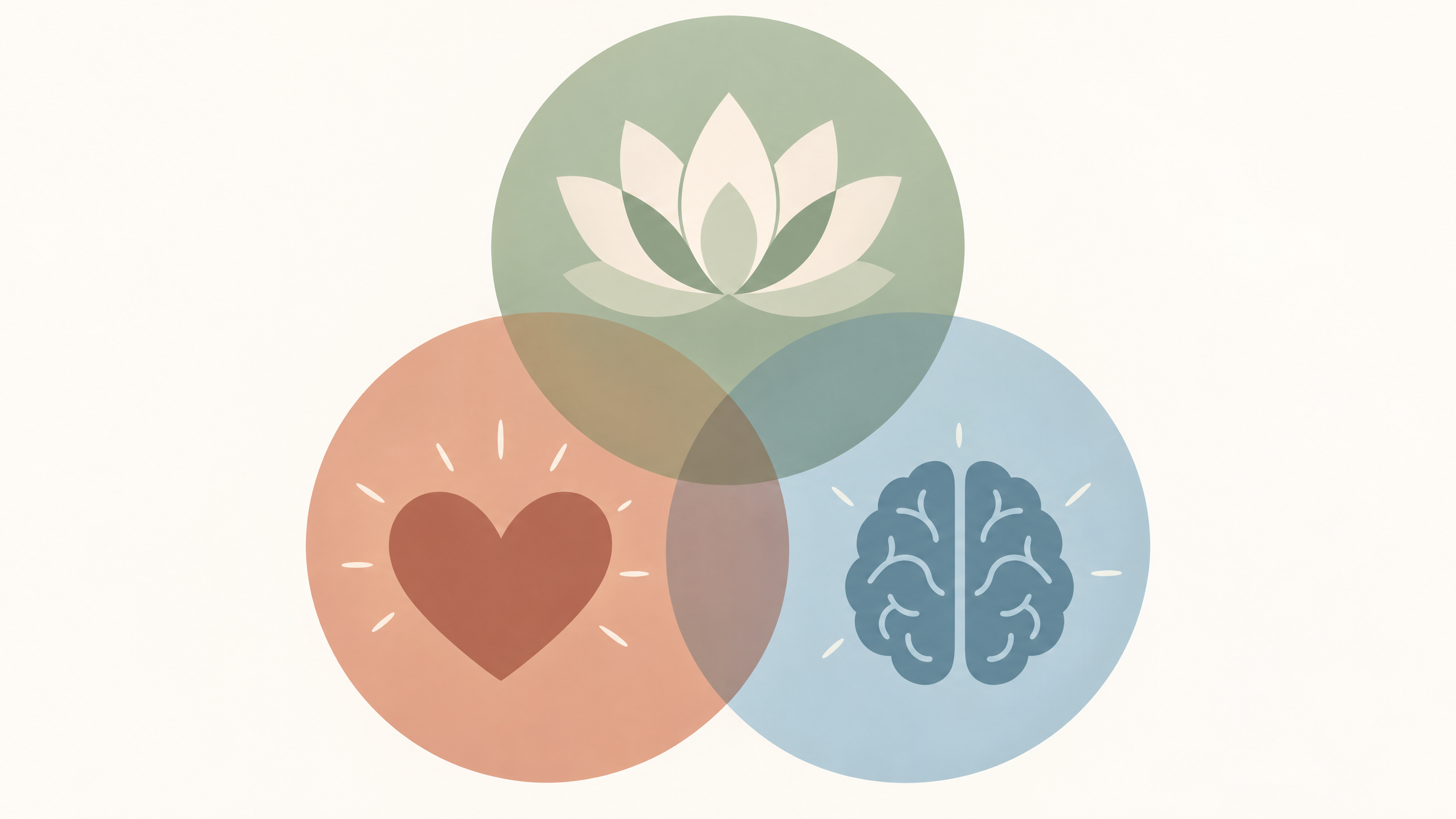
Imagine three concentric circles:
- The outer circle is wellbeing — your total state of flourishing across all dimensions of life
- Inside that is wellness — the practices and behaviours that maintain and improve your health
- Inside that is mental health — the specific domain of psychological and emotional functioning
You need mental health to have good wellbeing. You need wellness practices to maintain both. But neither wellness nor mental health alone captures what it means to truly thrive.
Why the Distinction Matters
When people focus on wellness alone — better sleep, more exercise, eating well — they often still feel unfulfilled if their social connections are weak, their work is meaningless, or their finances are a source of constant anxiety. Those are wellbeing problems, not wellness problems.
Similarly, treating mental health conditions through therapy and medication is essential and important — but it doesn’t automatically produce high wellbeing. A person in remission from depression may still lack close relationships, satisfying work, or a sense of purpose. Wellbeing thinking addresses that gap.
Understanding which level you’re working at helps you ask the right questions. If you’re doing everything right from a wellness perspective (sleeping, exercising, eating well) but still feeling hollow, look up to wellbeing. Explore what wellbeing actually means and the five dimensions — the answer to how you’re feeling might not be in your gym routine.